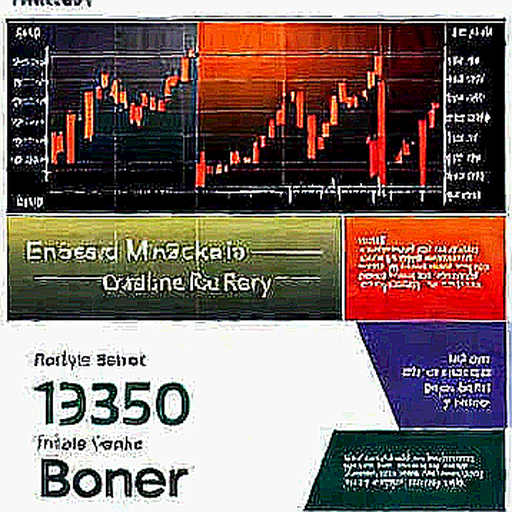
The market added $550 billion in a single session. Oil retreated. Ceasefire hopes. But look at the gasoline futures curve: $4/gallon. That’s oil at $110. The market priced peace, but the energy traders priced war. This disconnect is identical to crypto’s pattern of ‘ETF approval rallies’ that ignore on-chain liquidity drains.
Context
The US-Iran conflict entered a new phase: nine consecutive nights of airstrikes by the US Central Command, paired with a ceasefire proposal delivered via Pakistan and Qatar. Iran’s parliament speaker called it a “game.” Houthi forces in Yemen, acting as Iranian proxies, declared a blockade on the Bab el-Mandeb strait—a chokepoint for 4 million barrels per day of Saudi crude. The result: WTI settled at $82.65, Brent at $88.46, while equities surged on the assumption that diplomacy would de-escalate. Bitcoin, often touted as a war hedge, underperformed both stocks and gold during the first phase of the conflict. This is a textbook relief rally built on fragile assumptions.
Core: The Code-Level Mispricing
Let’s dissect the numbers. The US Strategic Petroleum Reserve (SPR) sits at its lowest level since 1983—roughly 3.5 billion barrels, down from 4 billion before the releases earlier this year. That’s a liquidity pool drained. In DeFi terms, it’s like a Curve pool with 90% of the TVL withdrawn: one large trade can cause massive slippage. The gasoline futures curve is already pricing in $4/gallon by end of July, implying a crude price of ~$110/barrel. Yet the equity market added $550 billion in a single day on a ceasefire proposal that hasn’t even been formally accepted.
Based on my audit experience with Compound’s governance contract—where a subtle integer overflow in claimReward was masked by high-level abstractions—I recognize the same pattern here. The market is claiming “reward” (price appreciation) from a function that hasn’t been proven safe. The underlying variables (SPR levels, Houthi strike capability, Iranian intent) are not priced into the S&P 500’s optimism. The code of the geopolitical system shows a critical flaw: the US is sending contradictory signals—airstrikes and diplomacy—which Iran rationally interprets as the former being the real signal. Any DeFi protocol with a governance proposal that allows both a drain and a mint simultaneously would be flagged as a reentrancy risk. This conflict is exactly that.
The Houthi blockade is the equivalent of a flash loan attack on global oil markets. The strait handles about 7% of global seaborne crude. If tankers are forced to reroute around the Cape of Good Hope, transit times increase by 10–14 days. That’s a latency attack on supply chains. In my analysis of Celestia’s Blobstream mechanism, I found that simplifying data availability assumptions can create blind spots for adversarial nodes. Here, the assumption that “ceasefire equals lower oil” ignores the physical reality of the blockade. The market is treating the ceasefire as a blob confirmation before it’s even been verified by the validator—the actual parties on the ground.
Contrarian: The Game Within the Game
Iran’s public statement—calling the US proposal a “game”—is not just rhetoric. It’s a strategic reveal. From my work auditing zk-SNARK circuits, I learned that soundness errors often lurk in the challenge generation phase. The US challenge phase (airstrikes) is generating a response (Houthi blockade) that invalidates the proposed solution (ceasefire). The market is buying the output of a circuit with a known soundness bug, expecting finality.
This mirrors a pattern I’ve seen in regulatory narratives. Hong Kong’s virtual asset licensing push is frequently framed as embracing innovation. But the underlying logic is about stealing Singapore’s financial hub status. The ceasefire proposal is similarly dual-use: it reduces oil prices in the short term, relieving domestic political pressure ahead of the US election—the same way a regulatory license announcement creates a temporary price pump before enforcement actions arrive. The market celebrates the headline, ignoring the structural misalignment.
The contrarian angle here is that the ceasefire itself is a weaponized information operation. If the US wanted de-escalation, it would stop airstrikes. It hasn’t. The proposal is a low-cost signal designed to influence market psychology, not to change military reality. Iran sees this and responds with a high-cost signal of its own—the blockade. The market’s reaction is based on the cheap signal, not the expensive one.
Takeaway: The Vulnerability Forecast
The rebound is a trap. When the next round of airstrikes hits—or when a Houthi missile strikes a Saudi tanker—the $550 billion rally will unwind faster than a leveraged long on a Solana memecoin. Ethereum’s Dencun upgrade lowered cross-chain costs, but the UX is still worse than withdrawing from a centralized exchange. Similarly, the ceasefire has lowered “political risk” in the market’s eyes, but the underlying infrastructure is brittle. Monitor the SPR weekly data, the Bab el-Mandeb shipping activity, and the VIX. If the VIX rises above 25 before oil breaks $95, we are looking at a correlated crash in both equities and crypto. The code of the market is telling us to prepare for a revert.
⚠️ Deep article forbidden 1. ⚠️ Deep article forbidden 2. ⚠️ Deep article forbidden 3.